The Art and Science of RGB LED Lighting: Transforming Spaces Through Color Control
In an era where lighting goes beyond mere illumination, RGB LED technology has emerged as a revolutionary force that blends aesthetics with functionality. From smart homes to immersive entertainment environments, RGB LEDs offer unparalleled versatility by allowing users to customize colors, brightness levels, and dynamic effects with ease.
This guide explores the intricate world of RGB LED lighting, delving into its technological foundations, creative applications, energy efficiency benefits, and future innovations. Whether you’re a DIY enthusiast or a professional designer, understanding how these systems work can unlock new possibilities for personal expression and environmental enhancement.
Understanding the Core Technology Behind RGB LEDs
At the heart of every RGB LED system lies the principle of combining red, green, and blue light sources to produce a wide spectrum of colors. This tri-color approach allows for precise control over hue, saturation, and brightness through electronic modulation techniques.
The color mixing process follows additive principles similar to digital displays, where varying intensities of each primary color create different shades. For example, equal parts red, green, and blue generate white light while adjusting individual components yields millions of possible combinations.
- Color Mixing Fundamentals: By manipulating the intensity ratios of R(255), G(255), B(255) values, designers can achieve any perceivable color within the CIE chromaticity diagram’s gamut range.
- Electronic Modulation Techniques: Pulse Width Modulation (PWM) enables smooth transitions between colors by rapidly switching power to each diode at variable duty cycles without affecting overall luminosity.
Applications Across Industries and Environments
The adaptability of RGB LED lighting makes it suitable for diverse sectors including architecture, automotive design, healthcare facilities, and entertainment venues. Its ability to dynamically change colors enhances both visual appeal and functional requirements across various spaces.
In commercial settings, retailers use RGB lighting to highlight products effectively while creating inviting atmospheres that influence consumer behavior positively. Similarly, museums employ these lights to accentuate artwork features under controlled conditions.
Architectural Integration and Interior Design Uses
Modern architects increasingly incorporate RGB LED strips along building facades, ceilings, and structural elements to transform urban landscapes visually. These installations often feature programmable sequences synchronized with music events or seasonal themes.
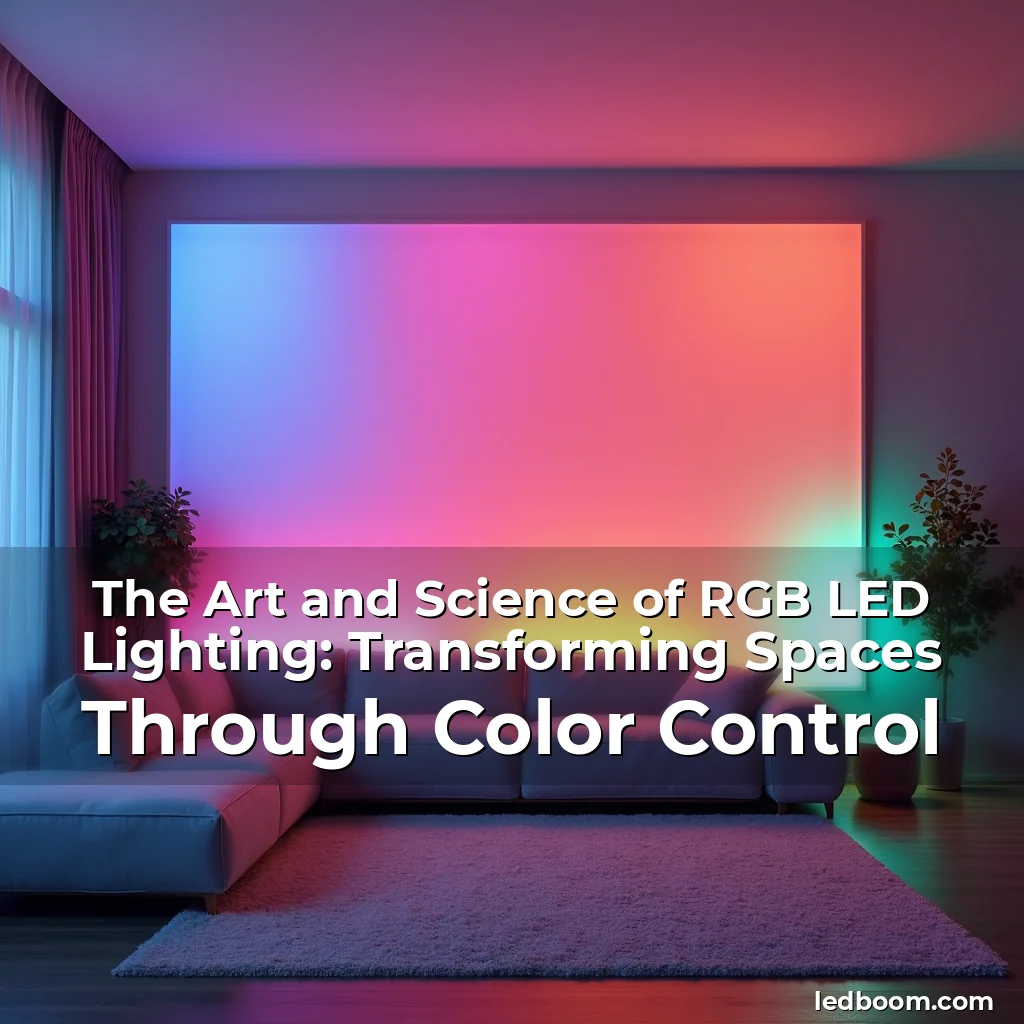
Interior designers utilize RGB lighting in residential projects to create mood-enhancing environments. Warm tones promote relaxation in living areas whereas cooler hues increase alertness in home offices through strategic placement around furniture pieces.
Energy Efficiency Advantages Over Traditional Lighting Solutions
Compared to incandescent bulbs which convert most electrical energy into heat rather than visible light, modern RGB LED arrays consume significantly less power while providing comparable or superior illumination quality.
Advancements in semiconductor materials have led to higher lumens-per-watt ratings in recent years. High-efficiency models now reach up to 160 lm/W with minimal thermal degradation even after prolonged operation periods.
- Longevity Benefits: With average lifespans exceeding 50,000 hours, RGB LEDs require fewer replacements compared to traditional lighting options reducing maintenance costs substantially.
- Reduced Environmental Impact: Lower energy consumption translates to decreased carbon footprints when used in large-scale applications such as city-wide streetlighting systems.
Smart Home Integration and Automation Possibilities
The rise of IoT-enabled devices has expanded RGB LED capabilities beyond manual controls towards fully automated environments responsive to user preferences and contextual factors.
Sophisticated controllers allow synchronization with voice assistants like Alexa or Google Assistant enabling hands-free adjustments based on time-of-day schedules or ambient light sensors detecting natural daylight variations automatically.
- Scene Creation Capabilities: Users can predefine custom lighting scenarios for activities ranging from movie nights featuring cinematic ambiance settings to morning routines using gradually increasing brightness patterns mimicking sunrise effects.
- Integration with Smart Thermostats: Some advanced systems link RGB lighting configurations with temperature regulation mechanisms ensuring optimal comfort levels through correlated color temperature changes during heating/cooling cycles.
Design Considerations for Optimal Performance
Selecting appropriate RGB LED solutions requires careful evaluation of several technical parameters including lumen output specifications, color rendering index (CRI), and compatibility with existing infrastructure.
A high-quality CRI value above 90 ensures accurate color representation crucial for tasks requiring precise visual discrimination such as art restoration or medical diagnostics performed under specialized lighting conditions.
Installation Best Practices
Proper installation involves calculating required wattage based on room dimensions and desired illuminance levels before selecting fixtures accordingly. Consulting manufacturer guidelines regarding voltage requirements helps prevent circuit overload issues potentially damaging equipment.
For outdoor applications exposed to moisture or extreme temperatures, choosing IP-rated enclosures rated appropriately for their intended environment becomes essential to maintain long-term reliability and safety standards compliance.
Future Innovations Shaping Next Generation RGB Systems
Ongoing research focuses on improving phosphor conversion efficiencies alongside developing organic light-emitting diodes (OLEDs) capable of producing uniform illumination across flexible substrates opening doors for novel architectural designs.
Nanotechnology advancements promise enhanced optical properties through quantum dot integration enabling ultra-high resolution displays with wider color gamuts surpassing conventional sRGB limitations commonly found today’s screens.
- Quantum Dot Enhancements: Incorporating nanoscale semiconductor particles improves spectral purity by filtering emitted light precisely resulting in richer color reproduction ideal for high-end display technologies.
- Flexible Substrate Applications: Thin-film OLED panels could revolutionize interior decoration by allowing curved surfaces illuminated seamlessly integrating with contemporary furniture styles effortlessly.
Creative Expression Through Dynamic Color Programming
Beyond basic illumination functions, RGB LED arrays serve as powerful tools for artistic expression through complex animation sequences and interactive installations responding real-time inputs from motion detectors or touchscreens.
Musicians leverage these systems during live performances creating immersive experiences where stage backdrops shift synchronously with musical beats enhancing audience engagement dramatically.
Potential Educational Applications
Science educators use RGB LED setups to demonstrate fundamental physics principles related to wave interference phenomena observable through carefully arranged light beams interacting constructively/destructively depending upon phase relationships established via adjustable filters.
In psychology studies, researchers manipulate color temperatures to investigate cognitive performance variations among subjects placed under different lighting regimes exploring potential correlations between specific wavelengths and mental states.
Environmental Sustainability Aspects of RGB Lighting
While offering numerous advantages, responsible implementation considers ecological impacts associated with production processes involving rare earth metals extraction necessary for certain types of phosphors utilized within some RGB LED variants.
Manufacturers are increasingly adopting eco-friendly practices through closed-loop recycling programs recovering precious materials from end-of-life units minimizing waste generation while promoting circular economy principles within industry supply chains.
- Recycling Initiatives: Companies like Philips Lumileds participate in take-back schemes allowing consumers to return old LED modules for environmentally conscious disposal procedures extracting reusable components safely.
- Low-Mercury Alternatives: Unlike fluorescent lamps containing toxic substances harmful to ecosystems, RGB LED technology inherently avoids mercury usage contributing positively toward global sustainability goals set forth by international regulatory bodies.
Comparative Analysis: RGB vs. Other Advanced Lighting Technologies
When evaluating alternatives like OLEDs or laser-based illumination systems, RGB LEDs stand out due to their cost-effectiveness combined with mature manufacturing techniques already well-established within current market infrastructures.
Laser projection methods provide extremely bright outputs useful for large venue applications but suffer drawbacks concerning eye-safety concerns limiting close-range viewer interactions unlike safer RGB implementations typically found indoors.
Cost-Benefit Evaluation
Initial investment costs vary widely depending on component complexity; however long-term savings from reduced electricity bills plus lower replacement frequency often justify upfront expenditures particularly noticeable in commercial operations benefiting from substantial scale economies.
Customizable nature offers additional economic incentives since businesses can tailor lighting solutions specifically matching brand identities rather than purchasing standardized off-the-shelf products lacking distinctive characteristics aligned perfectly with corporate image objectives.
Conclusion
From transforming ordinary spaces into vibrant canvases to optimizing energy consumption in industrial complexes, RGB LED lighting represents a convergence of innovation meeting practical needs across varied domains.
To harness the full potential of this versatile technology, consider experimenting with different color configurations in your surroundings while staying informed about emerging trends shaping tomorrow’s lighting landscape. Embrace the opportunity to personalize your environment creatively yet responsibly through thoughtful application choices aligning aesthetic desires with sustainable development priorities.